

Strawberries! And be a sparkling cordial host
Why are strawberries called strawberries?
Strawberries planted back in April are starting to swell now. Soon they’ll be ready to eat. But before they get to that mouth-watering bright-red-all-over-stage and the weather is warm and they are at their most delicious, the plants need a little more care and attention. Especially if they're in the ground rather than in a planter. [caption id="attachment_1390" align="aligncenter" width="300"]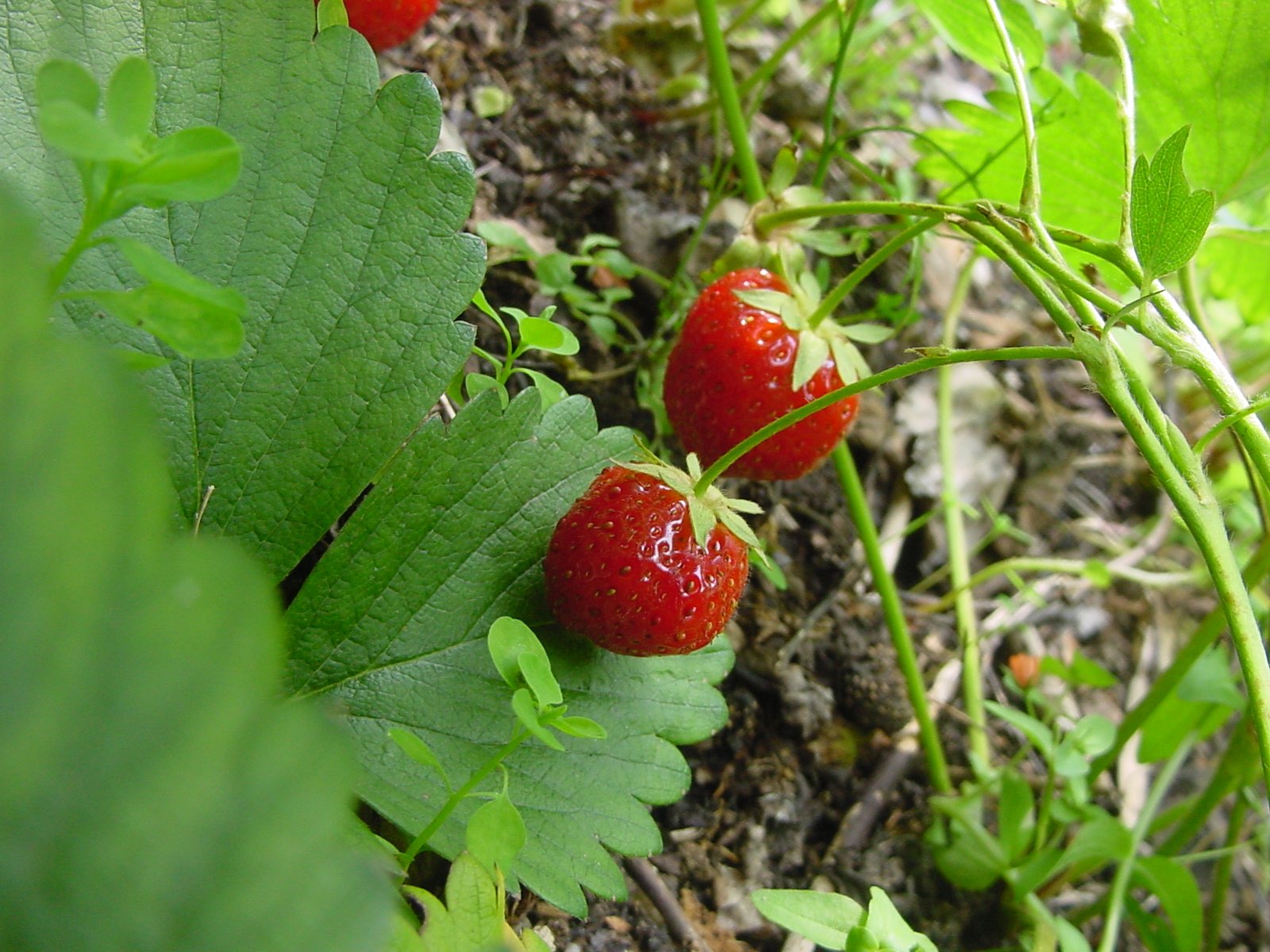 Garden strawberries (fraises du jardin). © Gilgil and licensed for re-use under the Creative Commons Attribution-Share Alike 3.0 Unported licence.[/caption]
Keep watering and feeding them every week or so with a liquid potash feed (such as a tomato feed). Water from below to avoid rot.
Garden strawberries (fraises du jardin). © Gilgil and licensed for re-use under the Creative Commons Attribution-Share Alike 3.0 Unported licence.[/caption]
Keep watering and feeding them every week or so with a liquid potash feed (such as a tomato feed). Water from below to avoid rot.
Bad things? Oh no!
As the berries begin to develop, they become heavy and may lie directly on the soil. If the ground is wet, two bad things can happen: (a) they rot, especially if they get dirty (b) slugs and snails will eat them.The solution
Just before the fruit gets to the heavy stage, raise the berries above the ground in some way.- Traditionally, straw was used, and that’s why they’re called strawberries! Tuck some straw underneath them. Straw doesn’t retain water if it rains (unlike hay) and lies randomly giving some ventilation under the fruit.
- You could use special re-usable strawberry mats, impregnated with copper to repel slugs and snails.
- You could make your own strawberry mat, backed up with your favourite slug and snail repellent. Just cut out a 30sq cm square of cardboard, make a slit from one edge to a hole in the middle and place them round individual plants.
- Or you could use black plastic sheeting, kept in place with stones. Make some small holes to stop water gathering on it.
Be a sparkling cordial host yourself
Homemade cordial is streets ahead of any you can buy. The elder is now in flower – time to make elderflower cordial. It’s gorgeous on its own or with sparkling water. And I gather it’s brilliant with white wine and tonic, and possibly a touch of gin. [caption id="attachment_1398" align="aligncenter" width="300"]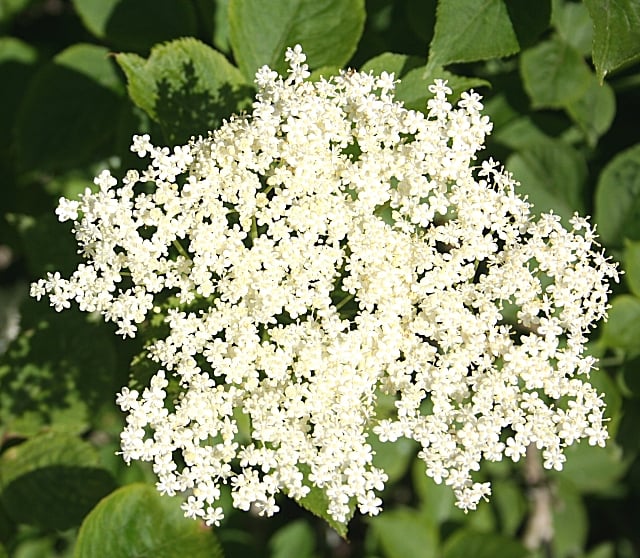 Elder flowers (Sambucus nigra) near Muir of Lochs, Moray. © Anne Burgess and licensed for re-use under Creative Commons Attribution-ShareAlike 2.0 Generic (CC BY-SA 2.0)[/caption]
When the sun is shining, pick creamy white heads with no trace of brown blossom. Try these recipes from Lotte Duncan and from Hugh Fearnley-Whittingstall.
[caption id="attachment_1385" align="aligncenter" width="300"]
Elder flowers (Sambucus nigra) near Muir of Lochs, Moray. © Anne Burgess and licensed for re-use under Creative Commons Attribution-ShareAlike 2.0 Generic (CC BY-SA 2.0)[/caption]
When the sun is shining, pick creamy white heads with no trace of brown blossom. Try these recipes from Lotte Duncan and from Hugh Fearnley-Whittingstall.
[caption id="attachment_1385" align="aligncenter" width="300"]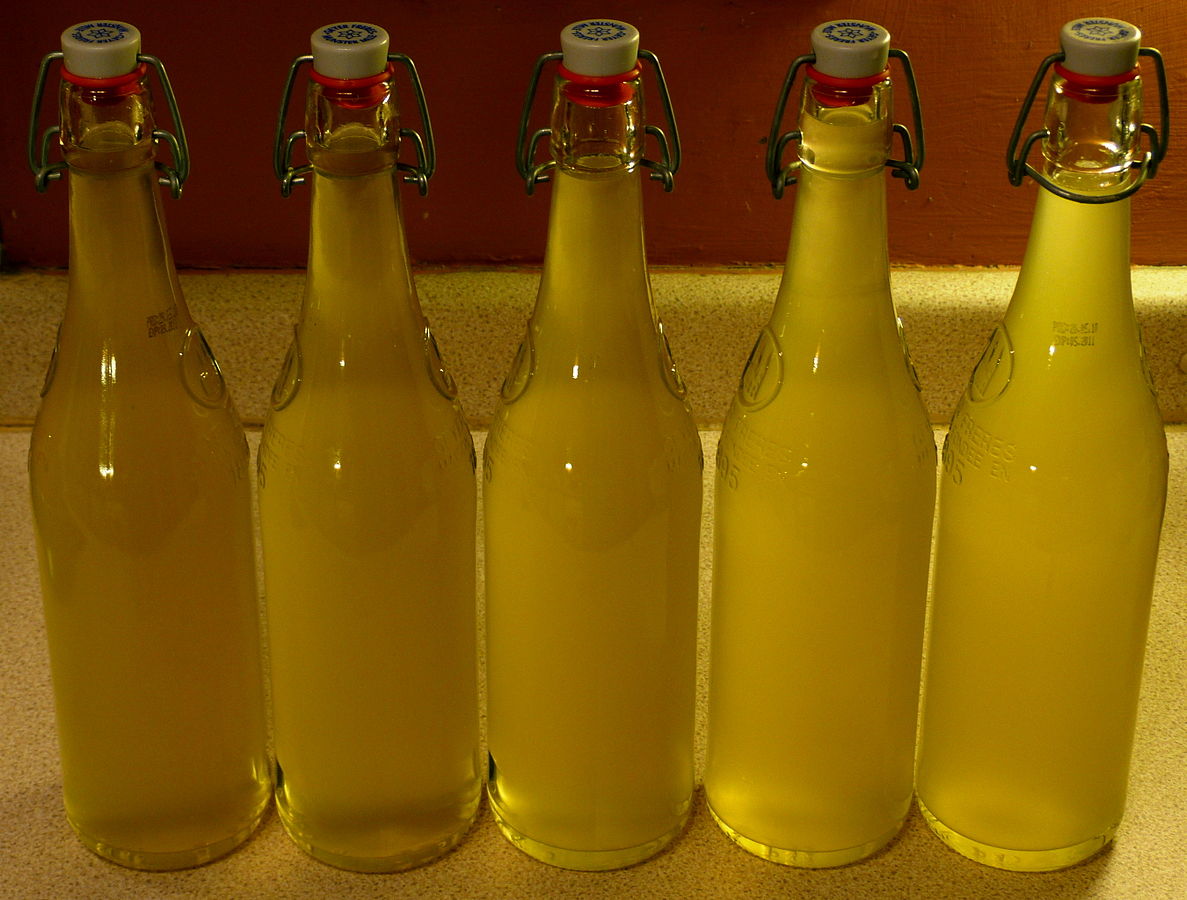 Elderflower cordial in bottles. © Jim Champion and licensed under the Creative Commons Attribution-Share Alike 2.0 Generic licence.[/caption]
Rhubarb cordial is also fabulous. Here Sarah Raven experiments with rhubarb, strawberry and rose-geranium lower sugar cordials.
[caption id="attachment_1392" align="aligncenter" width="300"]
Elderflower cordial in bottles. © Jim Champion and licensed under the Creative Commons Attribution-Share Alike 2.0 Generic licence.[/caption]
Rhubarb cordial is also fabulous. Here Sarah Raven experiments with rhubarb, strawberry and rose-geranium lower sugar cordials.
[caption id="attachment_1392" align="aligncenter" width="300"]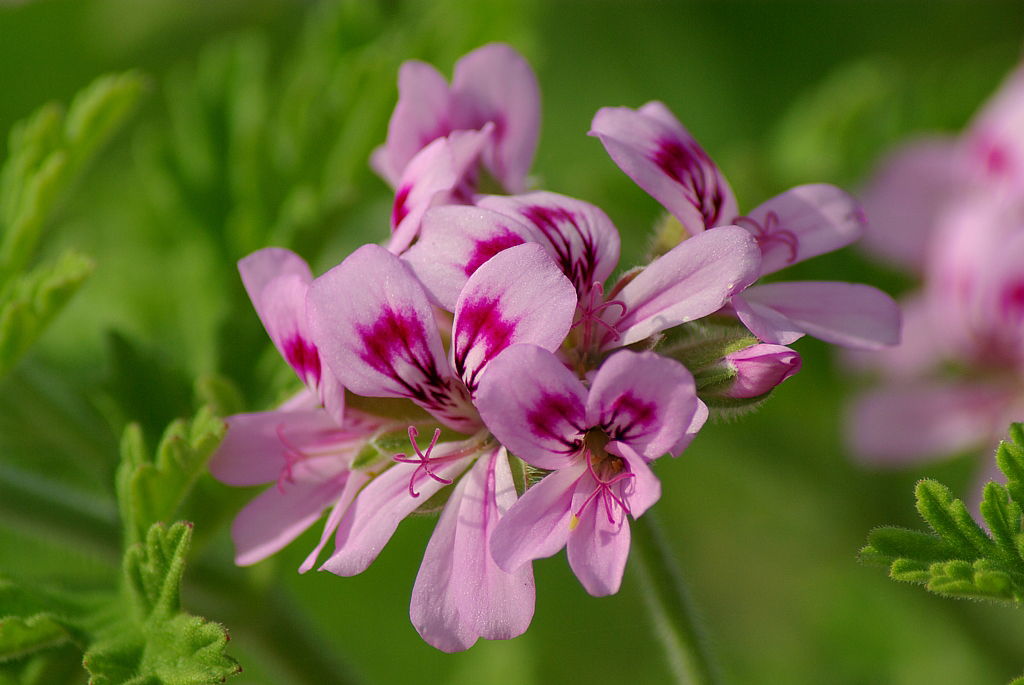 Rose geranium, Pelargonium graveolens. Released into the public domain by its author, Laitche (http://www.laitche.com/)[/caption]
Bertie Wooster, always cordial
P G Wodehouse’s character Bertie Wooster likes to see himself as a pleasant, cordial kind of chap. Cordiality is something that makes his world run smoothly – in the main, but not always. And Bobbie Wickham, with whom he falls in love on several occasions, is generally trouble, however cordial.[Bobbie] greeted me cordially as I entered – in fact, so cordially that I saw Jeeves pause at the door before biffing off to mix the cocktails and shoot me the sort of grave, warning look a wise old father might pass out to the effervescent son on seeing him going fairly strong with the local vamp. I nodded back, as much as to say ‘Chilled steel!’ and he oozed out, leaving me to play the sparkling host.Episode of the Dog McIntosh (1929) in Very Good, Jeeves (1930)